
Pharmacogenetic Testing (PGx)
Personalized Medication Insights, Backed by Science
At Harmony Mental Health, we understand that finding the right medication for mental health can feel like a lot of trial and error.
Pharmacogenetic testing helps change that. Using the GeneSight test, we can look at how your unique genetic makeup may affect how your body responds to psychiatric medications, helping guide more personalized and effective treatment choices.


What is Pharmacogenetic Testing?
Pharmacogenetic testing looks at how your genes influence the way your body processes and responds to medications.
With a quick, painless cheek swab, the GeneSight test identifies how fast or slow your body breaks down certain medications and how your receptors may respond.
Results can help your provider identify which medications may:
Be less likely to work effectively
Require dose adjustments
Be more likely to cause side effects
This helps reduce medication trial and error and supports safer, more effective care.
Why it Matters
Reduce Trial and Error: Pharmacogenetic testing provides a genetic roadmap that can help your provider choose options that fit your metabolism and chemistry.
Improve Tolerability: Minimize side effects through better understanding of how your body processes medications.
Optimize Treatment Outcomes: With better insight, your provider can make more informed choices, often leading to quicker relief and fewer medication changes.

Who Can Benefit from GeneSight Testing?
This test may be especially helpful if you:
Have tried multiple medications with limited success or side effects
Are starting medication for the first time and want to make informed choices
Have a family history of poor response or intolerance to psychiatric medications
Take several medications and want to minimize interactions
Prefer a more data-driven, personalized approach to your mental health care

Add-On Option: MTHFR Gene Testing
Along with the standard GeneSight test, we also offer an MTHFR gene test, a simple add-on that gives helpful information about how your body uses folate (vitamin B9), a nutrient important for brain and mood health.
-
The MTHFR gene helps your body turn folate into its active form, called L-methylfolate. This active form supports the production of important brain chemicals such as serotonin, dopamine, and norepinephrine, all of which play a role in mood and energy.
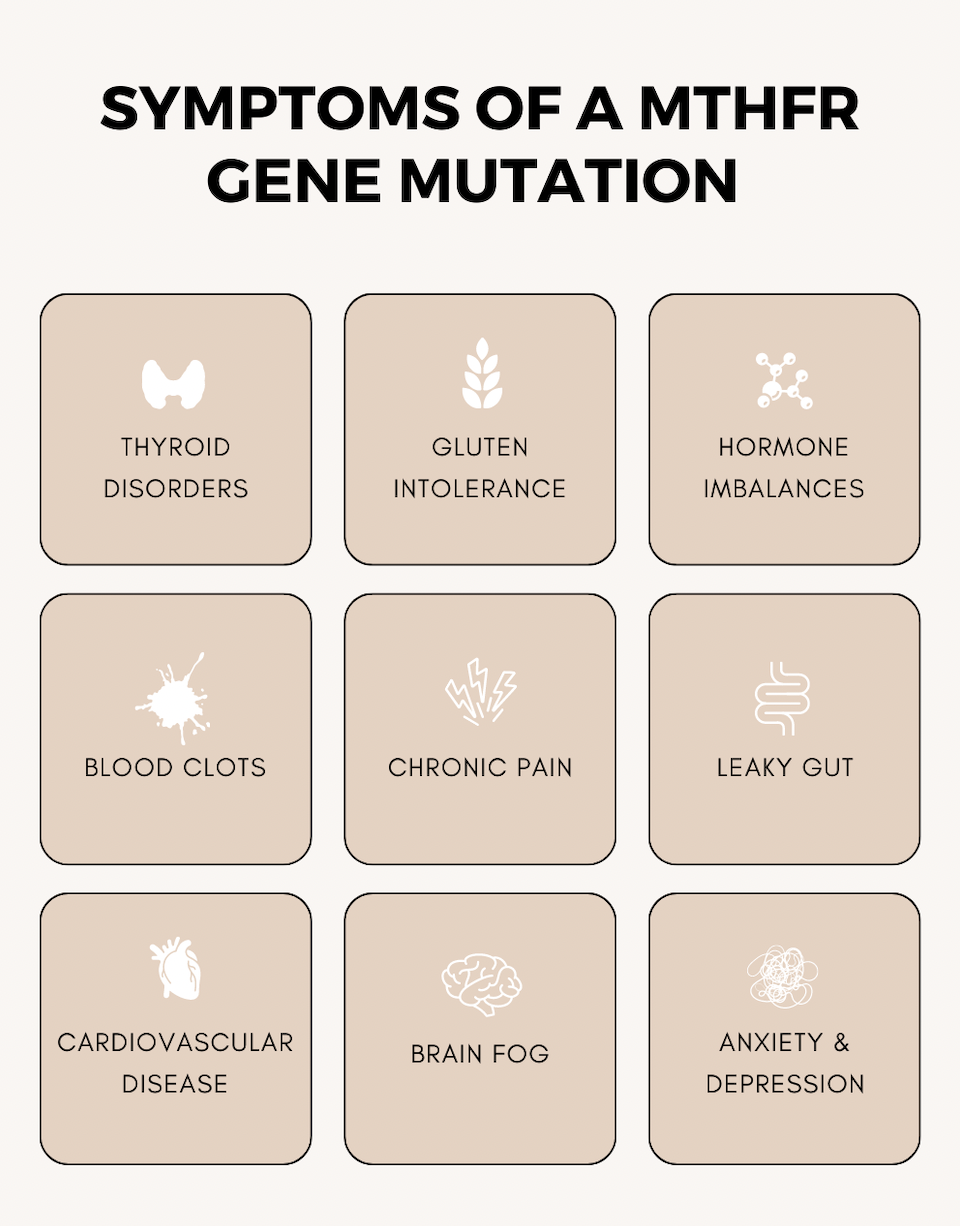
Some people have a change, or “mutation,” in this gene that makes the process less efficient. This can sometimes lead to:
Ongoing or treatment-resistant depression
Fatigue or low energy
Brain fog or trouble concentrating
Less response to certain antidepressants
-
If an MTHFR variation is found, your provider may recommend L-methylfolate supplements or methylated B vitamins to help your body make these brain chemicals more effectively.
For some people, this can improve how well their antidepressant or anti-anxiety medication works and support overall mood and focus. -
When combined with your GeneSight results, the MTHFR test gives a fuller view of how your body both processes medications and supports the nutrients that affect emotional balance.

What to Expect
Simple Sample: A painless cheek swab is collected in our clinic (or an at-home mailed kit).
Lab Analysis: The GeneSight lab evaluates 14+ genes related to medication metabolism and response.
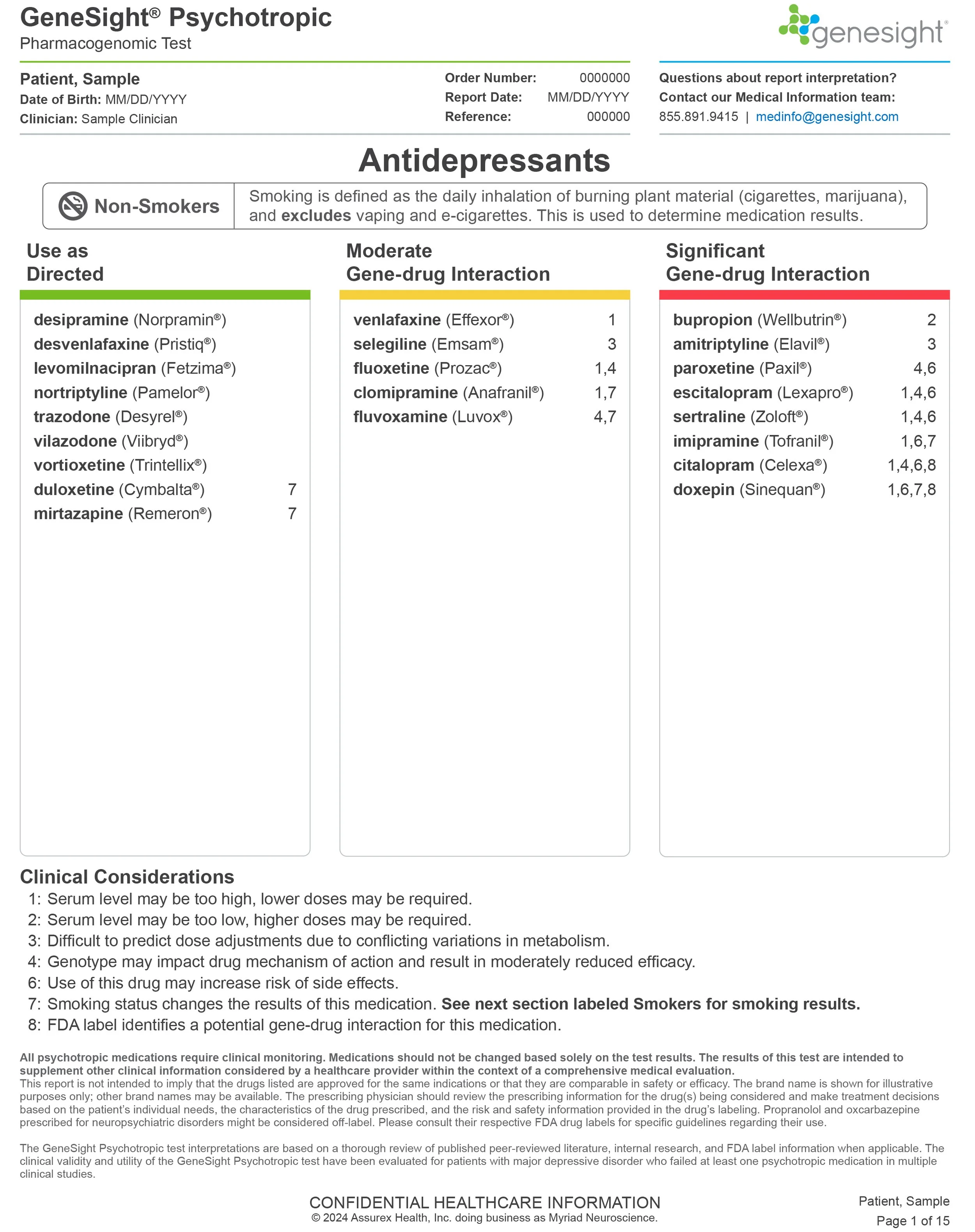
Personalized Report: Medications are grouped into “Use as Directed,” “Moderate Gene-Drug Interaction,” and “Significant Gene-Drug Interaction” categories.
Results Review: Your provider reviews the results with you and discusses how they may guide your treatment.
Lasting Value: Your genetics don’t change; this one-time test can inform future medication choices for years to come.
The GeneSight test does not predict which medication will work perfectly; it provides insights that support better-informed decisions.
Results are always interpreted alongside your clinical history, lifestyle, and overall treatment plan.
Insurance coverage varies. GeneSight also offers a low out-of-pocket cost option (typically under $330).
GeneSight testing is fully covered for Medicaid or Medicare Part B patients ($0).
Your genetic information is kept confidential and secure in accordance with federal privacy laws.
The MTHFR gene test is an optional add-on.
If you test positive for an MTHFR variant, treatment is straightforward and safe, often involving the use of activated folate (L-methylfolate) or methylated B-complex vitamins to support optimal neurotransmitter balance.
Important Things to Know
Sample Report
FAQs
-
Yes. Your genes don’t change, so this test usually only needs to be done once.
-
Many insurance plans cover GeneSight testing. GeneSight is great at helping you navigate your insurance coverage.
-
Yes, it can be ordered separately or added at the same time as your (PGx) GeneSight test. It’s a simple cheek swab.
-
In many studies, patients whose treatment incorporated GeneSight (or other PGx tests) showed improved response and remission rates compared to usual care. Additionally, MTHFR optimization has been associated with improved antidepressant response in some patients.
-
Typically within 3-5 business days after the lab receives your sample.
-
Not exactly. This helps your provider narrow down choices and make more informed decisions, reducing much of the trial and error in finding what works for you.